Paris does not need an introduction. But as a street photography destination, it deserves a more honest one than it usually gets.
Most articles about photographing Paris will point you toward the Eiffel Tower at golden hour, the bouquinistes along the Seine, the cobblestoned side streets of Montmartre. Those frames exist, they are beautiful, and they have been made a million times. If that is what you are looking for, the guides are already out there.
This is not that article.
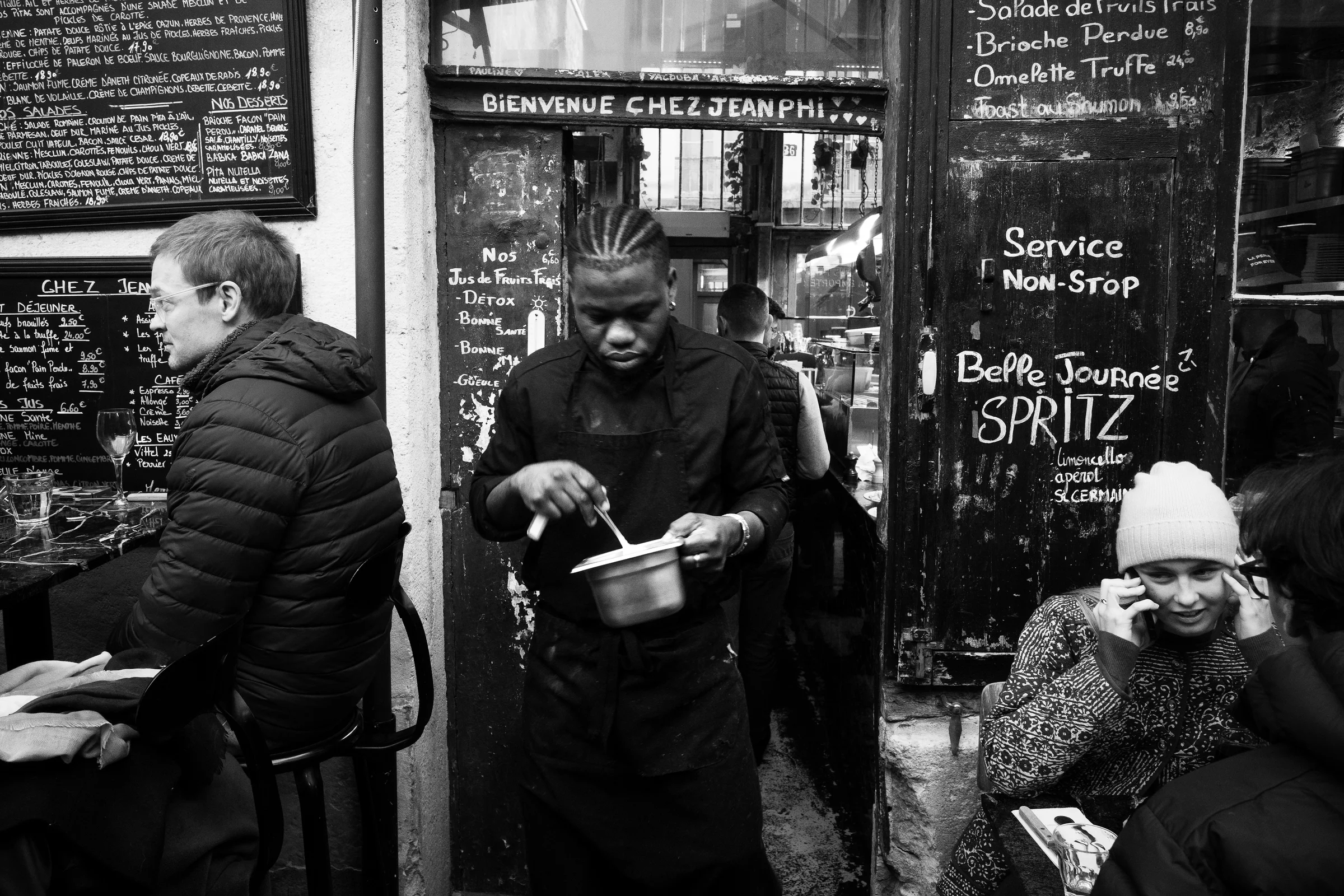
What I want to tell you is what Paris does to a photographer who decides to stay.
Originally from Jakarta, Indonesia, I came to Paris from a smaller city called Nantes, where I had spent a year doing an MBA and ended up hosting a photography exhibition almost by accident. When I moved to Paris, I had no plan beyond curiosity. I wanted to know the city the way you can only know a place when you stop treating it as a destination.
What I found was a city that is almost unreasonably generous to street photographers.
Paris has layers that take time to see. On the surface, it is the city everyone already knows. But underneath that, there are neighbourhoods that have barely been documented, communities that exist outside the postcard version of the city, and an energy that shifts block by block in ways that never stop surprising me. The metro alone is a world unto itself: dense, fast, honest, and endlessly photogenic.
And then there are the crowds. Paris draws people from every corner of the world, every day, all year round. As a photographer, that means the cast of characters never stops rotating. I have shot PSG fans flooding the streets after their team secured a place in the Champions League final. I have photographed strangers in the Metro who looked like they were carrying the weight of something enormous. I have stood in the middle of a city that was briefly, loudly, completely itself, and raised a camera.
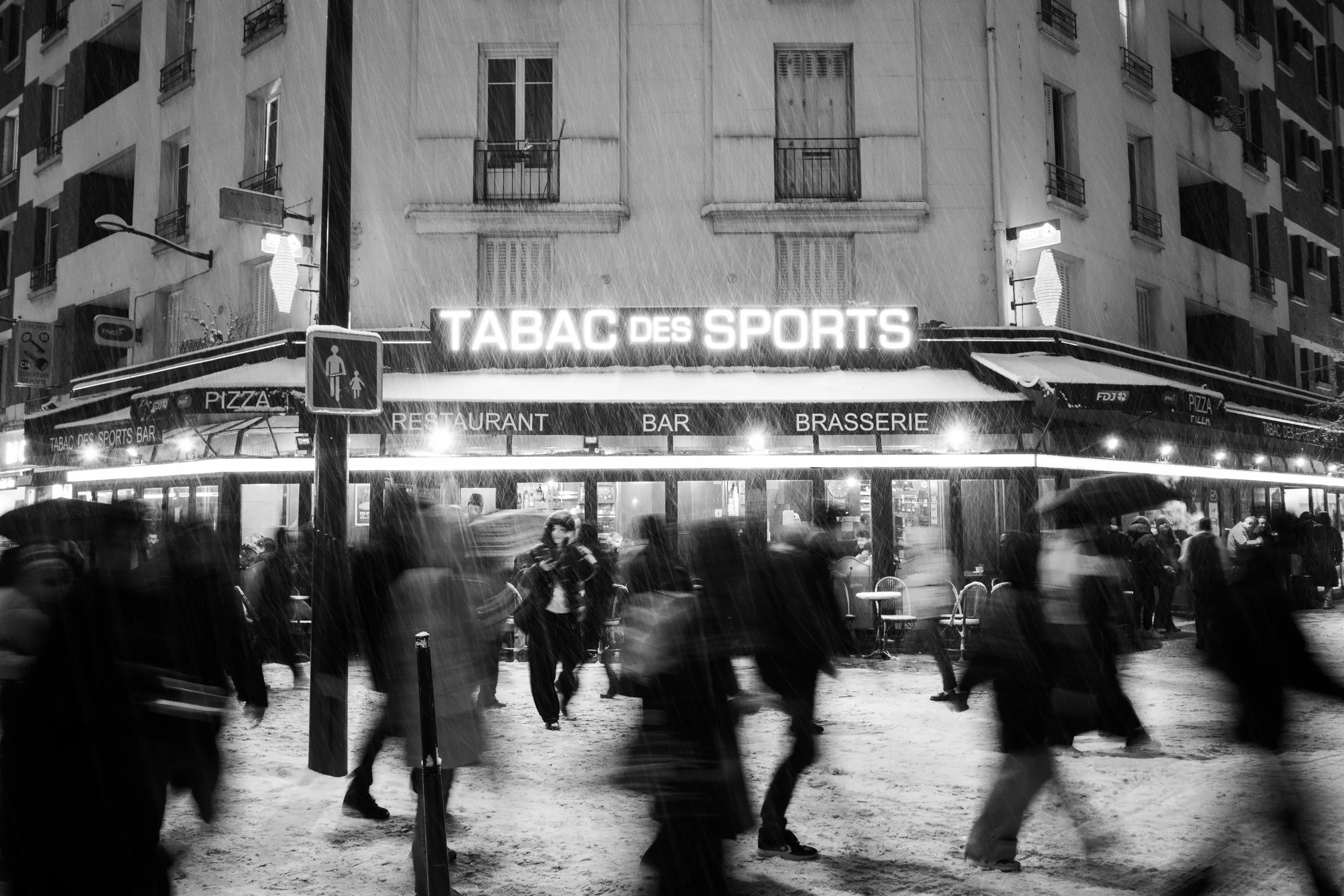
Three of those crowd shots have gone on to win international competitions: the inaugural GR Photo Festival in 2022, the 3rd edition of the GR Photo Festival in 2024, and the OnePlus Photography Awards in 2025. I mention that not to boast, but because the awards are proof of something I genuinely believe: the material is here. Paris keeps giving it.
My work on this site is organised into projects. Métropolitain lives in the metro. Quartier Asiatique documents the Asian neighbourhood where I live, a long-term project that has already outlasted its original deadline and keeps teaching me new things. Cinémascope and Bruit de Vie emerged from the archive, patterns I had been shooting without realising I was building something.
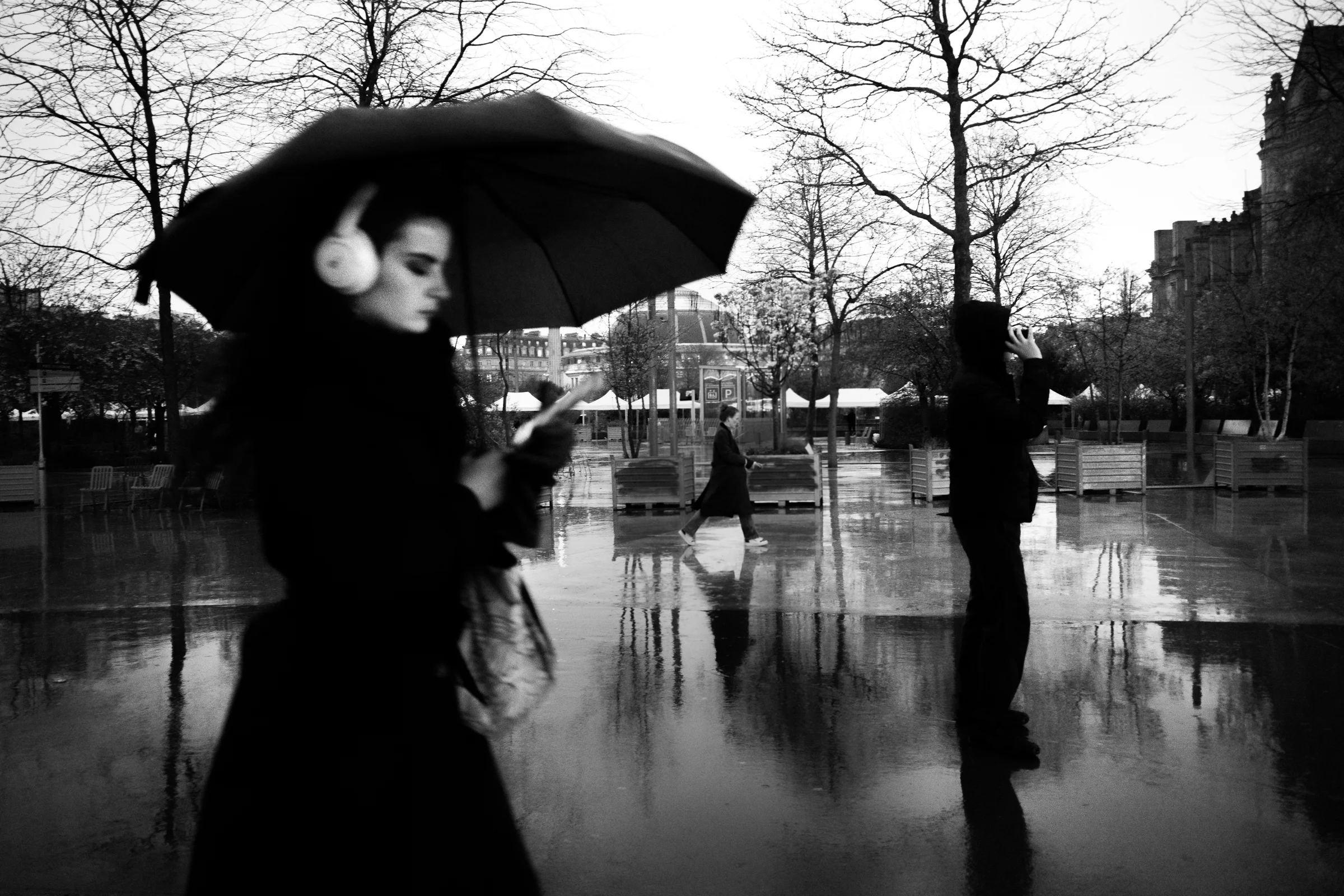
These are not travel photographs. They are the result of staying, of showing up repeatedly to the same streets with the same curiosity, of refusing to leave before the city has shown you what it actually looks like.
That is a different kind of photography from what most Paris guides are selling. And I think it is a more interesting one.
If you are a street photographer thinking about Paris, my honest advice is this: do not come with a shot list. Come with time. The city will find you things you were not looking for, in neighbourhoods you did not plan to visit, at hours that were not on your itinerary.
And if you are already here, or already thinking about staying: good. There is more than enough to keep you busy. I am several years in and I have not come close to the bottom of it.
This site is where I put the work. The projects are ongoing, the archive keeps growing, and new photographs get added as the city keeps offering them.
Come and see what Paris looks like when someone decides not to leave.